Custom Labels for Growing Brands


Guide to Order Industrial and Automotive Labels
(1/2) Key Standards and Requirements(Examples) For Industrial Labels
Safety Labels
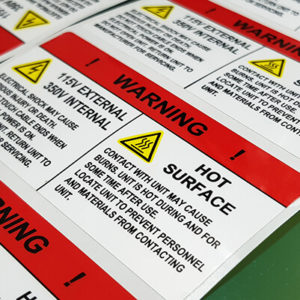
Safety labels in the United States are governed by the ANSI Z535 series of standards, which include:
-
ANSI Z535.1 - Safety Colors:
-
Defines safety colors (e.g., red, orange, yellow) and their specific uses.
-
Specifies ink formulations and PANTONE® color equivalents.
-
Establishes tolerances for hue, value, and chroma to ensure consistency.
-
-
ANSI Z535.3 - Safety Symbols:
-
Sets standards for the design, evaluation, and use of safety symbols.
-
Ensures symbols are universally recognizable and effectively communicate hazards.
-
-
ANSI Z535.4 - Product Safety Signs and Labels:
-
Covers the design, application, and placement of safety signs and labels.
-
Includes requirements for signal word panels (e.g., DANGER, WARNING, CAUTION), lettering size, and label maintenance.
-
Importance of Uniformity:
-
Consistency: Ensures that labels are interpreted correctly across different companies and industries.
-
Safety: Reduces the risk of misinterpretation, which can lead to accidents or fatalities.
-
Compliance: Facilitates safety audits and regulatory inspections by providing clear, standardized labels.
Chemical Labels
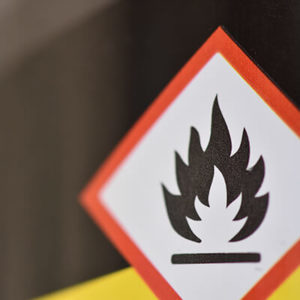
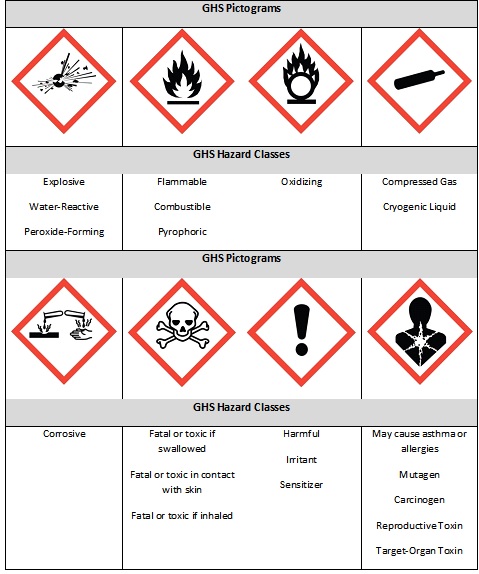
Chemical labeling is regulated by the Globally Harmonized System (GHS), which is managed by the United Nations and adopted by OSHA in the U.S. Key elements include:
-
GHS Hazard Pictograms:
-
Standardized symbols that communicate physical, environmental, and health hazards.
-
Examples include the skull and crossbones for acute toxicity and the flame for flammability.
-
-
Signal Words:
-
"Danger" for severe hazards and "Warning" for less severe hazards.
-
-
Hazard Statements:
-
Standardized phrases that describe the nature and severity of the hazard (e.g., "Fatal if swallowed").
-
Purpose:
-
Global Consistency: Ensures that chemical hazards are communicated uniformly across different countries and languages.
-
Safety: Provides clear, concise information to prevent accidents and exposure to hazardous substances.
-
Automotive Labels
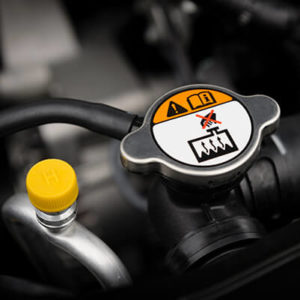
The Automotive Industry Action Group (AIAG) sets standards for automotive labels, including:
-
Bar Code Specifications:
-
Height, quiet zones, and contrast requirements for optimal scanning.
-
-
Text and Symbol Dimensions:
-
Ensures readability and consistency across different labels.
-
-
Label Durability:
-
Requirements for materials and coatings to withstand harsh environments.
-
Rationale:
-
Efficiency: Standardized labels improve supply chain efficiency and reduce errors.
-
Accessibility: High-contrast labels (e.g., black on white) are easier to read and scan, especially for individuals with colorblindness.
Best Practices for Industrial Labels
-
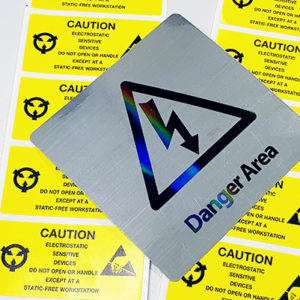
Clarity and Readability:
-
Use clear, concise language and high-contrast text.
-
Ensure labels are legible from the appropriate distance.
-
-
Durability:
-
Choose materials like BOPP (biaxially-oriented polypropylene) for resistance to temperature, abrasion, and moisture.
-
Apply protective coatings for additional durability in harsh environments.
-
-
Placement:
-
Avoid placing labels where they could interfere with machinery operation.
-
Ensure labels are applied to clean, dry surfaces for better adhesion.
-
-
Multilingual Considerations:
-
Use symbols to communicate across language barriers.
-
Include additional languages as needed, depending on the workforce and location.
-
Language and Symbols
-
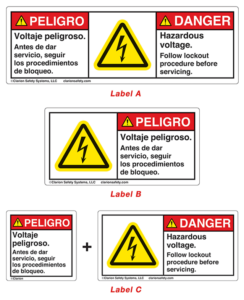
ANSI Z535.4 encourages the use of symbols to communicate hazard information across language barriers.
-
Facility owners should determine which additional languages are necessary based on the workforce and location.
(2/2) Ordering
When it comes to ordering industrial or automotive labels, it's essential to partner with a supplier like JinWuZhou who understands the unique challenges of these environments. The key factors to consider include:
-
Application Surface: Ensuring that the adhesive works with the surface, whether it's clean, dry, or treated. Proper surface prep is crucial for ensuring the label sticks and lasts.
-
Label Environment: The conditions the label will endure—temperature extremes, exposure to water, chemicals, UV light, or outdoor weather—will impact the materials and adhesive needed.
-
Application Method: Knowing if the labels will be applied manually or by machine helps determine the best format, whether rolls, sheets, or singles.
-
Volume and Supply Chain: For companies with large or fluctuating needs, understanding volume and potential storage constraints helps optimize costs and avoid overstocking.
Choosing the right supplier, who can advise based on your specific needs, will save you time and money by ensuring you get labels that are durable, compliant, and cost-effective.
Is there a specific type of label you're looking for, or are you exploring options for a particular application?
Custom printed labels for food and beverage packaging, including bottles, jars, cans and containers. Available in paper, film and waterproof materials with custom sizes, shapes and finishing options.
Custom printed labels for cosmetics, skincare and personal care products. Choose from waterproof films, clear labels, paper materials and premium finishes such as foil stamping and UV. Available in custom sizes and shapes to fit bottles, jars, tubes and other cosmetic packaging.
When labeling chemical containers, the most important consideration is the wettability and adhesion of adhesives and surface materials. The chemical labels provided by Jin Wuzhou have extremely high adhesion to typical plastic containers with oil and industrial chemicals on the labeling surface of chemicals, and have unique weather resistance and excellent chemical corrosion resistance, can provide you with professional solutions to paste in the medical and pharmaceutical products on the label needs to be used in a variety of environments. In particular, the label for an ampoule bottle is not allowed to be peeled off from the viewpoint of safety, and therefore, a material having a strong adhesive force is used. Labels affixed to articles such as syringes must be designed to withstand sterilization. Therefore, it is necessary to use a strong and restorative adhesive material.
Advertising decoration with film PP and PVC materials, suitable for all kinds of environmental use, with superior weather resistance and anti-ultraviolet function.
advertising decoration to film PP and PVC materials, suitable for all kinds of environmental use, with superior weather resistance and anti ultraviolet function.
Security/Anti-counterfeit label
Over the years, a large number of fake and shoddy products have appeared in the market, causing great damage to the entire economic environment and the copyright interests of manufacturers. Jin Wuzhou attaches great importance to the demand of the anti-counterfeiting market and provides anti-counterfeiting labels made of irreversible materials such as void materials.
For the recipient labels and distribution documents pasted on corrugated boxes used in online sales, etc., in addition to the clear printing suitability of bar codes, the pasting suitability that the labels will not fall off during distribution is also required. In addition, the identification label of the turnover box used for food transportation can be easily removed by the warm water washing process.
Banking and invoice paper is a specialized type of paper used in the financial and accounting industries. It is typically made of high-quality, durable materials that are able to withstand the rigors of constant handling and printing.
Banking paper is used for printing checks, deposit slips, and other financial documents that require security features to prevent fraud. These features may include watermarks, security threads, and microprinting to deter counterfeiters.
Invoice paper is used for printing invoices, receipts, and other accounting documents. It is often pre-printed with company logos, payment terms, and other important information to streamline the invoicing process and ensure accuracy in financial transactions.
Both banking and invoice paper are designed to be compatible with various printing methods, such as laser printers, inkjet printers, and dot matrix printers. This ensures that the documents printed on these papers are clear, legible, and professional-looking.
Thermal paper rolls are a type of paper that is coated with a special chemical that reacts to heat. When heat is applied, the paper changes color to create an image or text. These rolls are commonly used in receipt printers, cash registers, and credit card terminals.
Thermal paper rolls come in various sizes and lengths to accommodate different machines and printing needs. The standard length for thermal paper rolls is typically around 230 feet, but shorter or longer rolls are also available depending on the requirements of the device.
Self-Adhesive Label Sticker Raw Material
Self-adhesive label stickers are made from a variety of raw materials.
JWZ provides high quality uncut materials for buyers who intent to do their own label die-cutting.
a magical, jelly-like texture that adds a whimsical touch to any surface.
Whether you want to personalize your laptop, phone case, water bottle, or notebook, our custom magic/jelly stickers are the perfect way to add some flair to your belongings.
Our stickers are made from high-quality materials that are durable and long-lasting, so you can enjoy them for years to come.
Custom printed labels for candles, jars and home fragrance products. Available in paper, clear and film materials with custom shapes and premium finishes such as foil stamping, embossing and UV.
Custom waterproof labels for bottles, jars and product packaging. Available in durable PP, PET and other film materials with strong adhesion, custom shapes and a variety of printing and finishing options.
Custom clear and transparent labels for bottles, jars and product packaging. Create a clean “no-label” look with durable film materials, custom shapes and premium printing options.
Follow us

OUR PRODUCTS
Contact Information
Huizhou Jinwuzhou Paper Packaging Co., Ltd.
Phone: 13516687303 (Mr. Wu)
Email: w318337922@gmail.comRoom 601, Address: Building A3, Gaosheng West Lake Zhigu Industrial Park, No. 40, Hongling Third Road, Shuikou Street, Huicheng District, Huizhou City
