Custom Labels for Growing Brands


Labels for Industrial Use
Industrial label: Jinwuzhou tire special label adopts special PET and PP film material, which has the characteristics of water resistance, oil resistance and chemical resistance, accounting for the market leading technology. And the use of special strong adhesive, can penetrate into the concave surface, firmly paste, unique resistance to tire surface penetration of the softener erosion function; good performance, can meet the requirements of different tires, excellent cold resistance, the lowest labeling temperature can be as low as -5 ℃. Tire labels can be used for bare tire labeling greatly reduces its packaging costs, and beautiful, in line with EU ROHS standards.
Key words:
Labels for Industrial Use
hiddenValue
Previous Page:
: Next Page
Previous Page:
- Product Description
-
Guide to Order Industrial and Automotive Labels
(1/2) Key Standards and Requirements(Examples) For Industrial Labels
Safety Labels
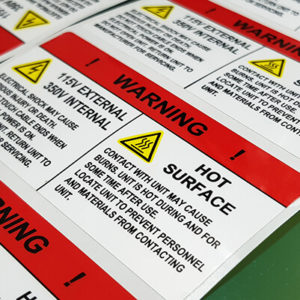
Safety labels in the United States are governed by the ANSI Z535 series of standards, which include:
-
ANSI Z535.1 - Safety Colors:
-
Defines safety colors (e.g., red, orange, yellow) and their specific uses.
-
Specifies ink formulations and PANTONE® color equivalents.
-
Establishes tolerances for hue, value, and chroma to ensure consistency.
-
-
ANSI Z535.3 - Safety Symbols:
-
Sets standards for the design, evaluation, and use of safety symbols.
-
Ensures symbols are universally recognizable and effectively communicate hazards.
-
-
ANSI Z535.4 - Product Safety Signs and Labels:
-
Covers the design, application, and placement of safety signs and labels.
-
Includes requirements for signal word panels (e.g., DANGER, WARNING, CAUTION), lettering size, and label maintenance.
-
Importance of Uniformity:
-
Consistency: Ensures that labels are interpreted correctly across different companies and industries.
-
Safety: Reduces the risk of misinterpretation, which can lead to accidents or fatalities.
-
Compliance: Facilitates safety audits and regulatory inspections by providing clear, standardized labels.
Chemical Labels
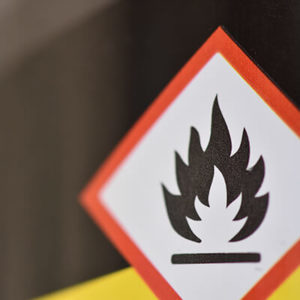
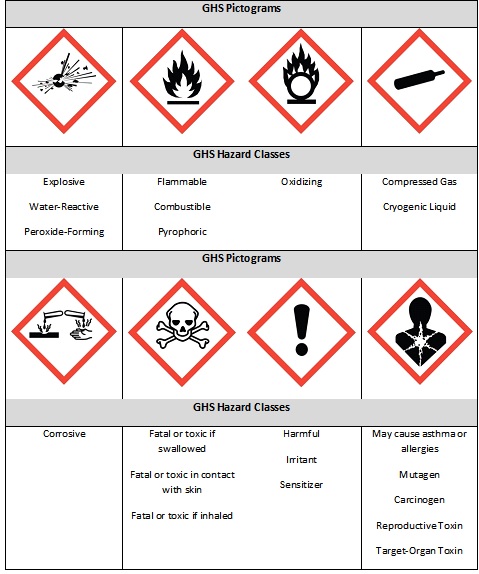
Chemical labeling is regulated by the Globally Harmonized System (GHS), which is managed by the United Nations and adopted by OSHA in the U.S. Key elements include:
-
GHS Hazard Pictograms:
-
Standardized symbols that communicate physical, environmental, and health hazards.
-
Examples include the skull and crossbones for acute toxicity and the flame for flammability.
-
-
Signal Words:
-
"Danger" for severe hazards and "Warning" for less severe hazards.
-
-
Hazard Statements:
-
Standardized phrases that describe the nature and severity of the hazard (e.g., "Fatal if swallowed").
-
Purpose:
-
Global Consistency: Ensures that chemical hazards are communicated uniformly across different countries and languages.
-
Safety: Provides clear, concise information to prevent accidents and exposure to hazardous substances.
-
Automotive Labels
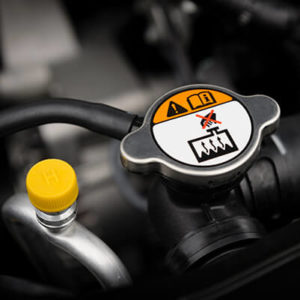
The Automotive Industry Action Group (AIAG) sets standards for automotive labels, including:
-
Bar Code Specifications:
-
Height, quiet zones, and contrast requirements for optimal scanning.
-
-
Text and Symbol Dimensions:
-
Ensures readability and consistency across different labels.
-
-
Label Durability:
-
Requirements for materials and coatings to withstand harsh environments.
-
Rationale:
-
Efficiency: Standardized labels improve supply chain efficiency and reduce errors.
-
Accessibility: High-contrast labels (e.g., black on white) are easier to read and scan, especially for individuals with colorblindness.
Best Practices for Industrial Labels
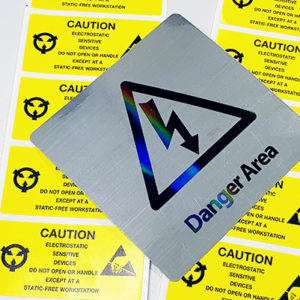
-
Clarity and Readability:
-
Use clear, concise language and high-contrast text.
-
Ensure labels are legible from the appropriate distance.
-
-
Durability:
-
Choose materials like BOPP (biaxially-oriented polypropylene) for resistance to temperature, abrasion, and moisture.
-
Apply protective coatings for additional durability in harsh environments.
-
-
Placement:
-
Avoid placing labels where they could interfere with machinery operation.
-
Ensure labels are applied to clean, dry surfaces for better adhesion.
-
-
Multilingual Considerations:
-
Use symbols to communicate across language barriers.
-
Include additional languages as needed, depending on the workforce and location.
-
Language and Symbols
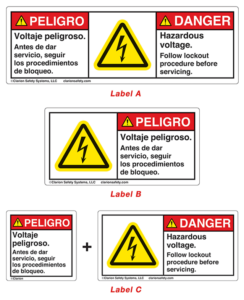
-
ANSI Z535.4 encourages the use of symbols to communicate hazard information across language barriers.
-
Facility owners should determine which additional languages are necessary based on the workforce and location.
(2/2) Ordering
When it comes to ordering industrial or automotive labels, it's essential to partner with a supplier like JinWuZhou who understands the unique challenges of these environments. The key factors to consider include:
-
Application Surface: Ensuring that the adhesive works with the surface, whether it's clean, dry, or treated. Proper surface prep is crucial for ensuring the label sticks and lasts.
-
Label Environment: The conditions the label will endure—temperature extremes, exposure to water, chemicals, UV light, or outdoor weather—will impact the materials and adhesive needed.
-
Application Method: Knowing if the labels will be applied manually or by machine helps determine the best format, whether rolls, sheets, or singles.
-
Volume and Supply Chain: For companies with large or fluctuating needs, understanding volume and potential storage constraints helps optimize costs and avoid overstocking.
Choosing the right supplier, who can advise based on your specific needs, will save you time and money by ensuring you get labels that are durable, compliant, and cost-effective.
Is there a specific type of label you're looking for, or are you exploring options for a particular application?
-
Product Consulting
Note: Please leave your phone number and our professionals will contact you as soon as possible!


Follow us

OUR PRODUCTS
Contact Information
Huizhou Jinwuzhou Paper Packaging Co., Ltd.
Phone: 13516687303 (Mr. Wu)
Email: w318337922@gmail.comRoom 601, Address: Building A3, Gaosheng West Lake Zhigu Industrial Park, No. 40, Hongling Third Road, Shuikou Street, Huicheng District, Huizhou City
